Porcelain Veneers: How to Choose the Right Option
How many veneers you need, how they compare with crowns, Lumineers and bonding, and what a smile makeover really involves.
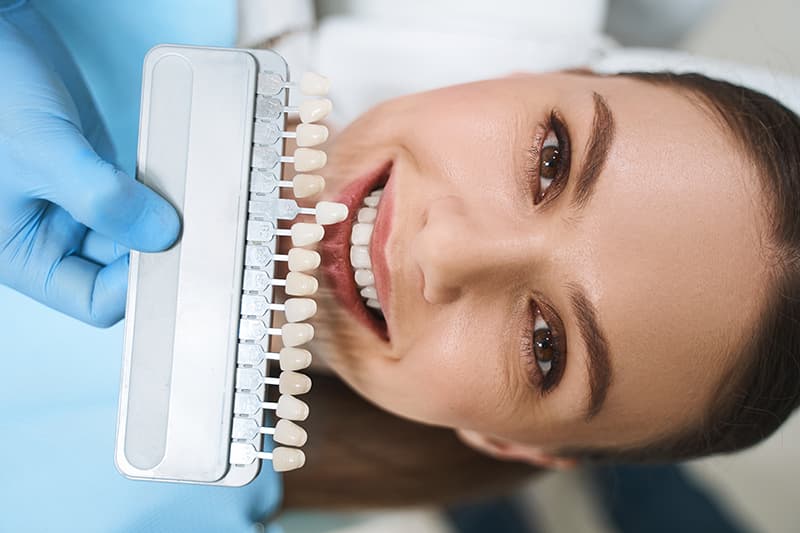
Veneers are one of several ways to change the look of your teeth. This guide helps you decide how many you need, how they differ from crowns, Lumineers and composite bonding, and what a smile makeover plan should contain.
For material choices, see [zirconia vs porcelain veneers](/blog/choosing-between-zirconia-and-porcelain-veneers) and [what affects the cost of veneers](/blog/what-affects-the-cost-of-veneers-in-turkey).
How many veneers do you need?
It depends on your smile
The number of veneers depends on what you can see when you smile, the shape and colour you want and the condition of your teeth.
What dentists look at
Common patterns
Some patients have a few veneers on teeth that bother them. Others have a full set across the visible smile. Your dentist can explain the reasoning in your case.
More is not always better
Treat only what needs treatment. A good plan preserves healthy tooth structure and considers alternatives such as bonding or whitening. See composite bonding vs veneers.
Previewing the result
Ask for a digital preview or a mock-up. See [smile makeover](/treatments/smile-makeover).
Thinking in terms of your smile zone
Smile zones differ. Some people show only their front teeth, others show premolars and even the first molars when they laugh. Your dentist will often photograph your smile and speech to see which teeth are visible, and plan around that.
Balance and proportion
A natural-looking smile depends on how the teeth relate to each other and to your lips and face. Teeth of very different size or shade next to each other draw attention. Often, the decision about how many veneers is also a decision about matching and symmetry.
Stages of decision-making
1. Clarify what bothers you: colour, shape, gaps, chips or alignment
2. Ask your dentist which of those needs veneers and which could be treated otherwise
3. View a digital preview or mock-up
4. Agree the number and the teeth involved, in writing
5. Confirm any preparatory treatment, such as whitening first
A word on pressure
Be cautious if you are pushed towards a full set without a clear reason or any discussion of alternatives. A good plan is the smallest one that achieves what you want.
Veneers vs crowns
Different coverage
A veneer covers the front surface of a tooth. A crown covers the whole tooth.
Comparison
When veneers are discussed
Discolouration that whitening cannot fix, small chips, gaps, or uneven shapes where the tooth is otherwise strong.
When crowns are discussed
Large fillings, cracks, root-treated teeth, or teeth that need strengthening. See [dental crowns](/treatments/dental-crowns).
Making the decision
Your dentist assesses how much sound tooth remains and what the tooth needs to do. See also [zirconia vs e-max crowns](/blog/zirconia-vs-emax-crowns-which-to-choose).
What the tooth needs
A useful way to decide is to ask what the tooth needs rather than what you want. A strong tooth with a cosmetic issue may only need a veneer. A weak, cracked, heavily filled or root-treated tooth often needs the strength and protection of a crown.
How the dentist decides
The dentist will look at how much healthy tooth remains, the position of the tooth in your bite, the forces it must bear, and the colour and shape you want. Back teeth, which take heavy chewing forces, are more often crowned. Front teeth with intact structure are more often veneered.
Mixed plans
Many smile designs combine both: veneers on healthy front teeth and crowns on those that need strengthening. This is normal, and the aim is a result that looks consistent and works well.
Materials
Both veneers and crowns can be made in different materials, which affect strength and appearance. See [zirconia vs porcelain veneers](/blog/choosing-between-zirconia-and-porcelain-veneers) and [zirconia vs e-max crowns](/blog/zirconia-vs-emax-crowns-which-to-choose).
Lumineers vs traditional veneers
Thin versus conventional
Lumineers are a brand of ultra-thin porcelain veneers that may need little or no enamel removal. Traditional veneers are slightly thicker and usually involve some preparation.
Comparison
Who may suit Lumineers
Patients with healthy teeth of fairly good colour and shape who want a subtle change.
Who may suit traditional veneers
Teeth that are significantly discoloured, crooked or need larger changes.
Be careful with expectations
Because they are thin, Lumineers may not suit every case. A good dentist will tell you honestly. See [Lumineers](/treatments/lumineers) and [dental veneers](/treatments/dental-veneers).
What "no-prep" really means
Some Lumineers cases need no drilling, while others need minimal preparation. Even when little enamel is removed, the veneer adds thickness to the tooth, which can make teeth look bulky if the design does not account for it. A skilled dentist plans the shape carefully.
Limitations
Because they are thin, Lumineers cannot always hide dark or heavily stained teeth, and they may not suit teeth that are very crooked or protruding. In such cases traditional preparation allows more correction.
Where they shine
Lumineers can be a good option for mild colour change, small gaps, slightly worn edges or minor shape irregularities in healthy teeth, with minimal tooth removal.
Questions to ask
1. Is my case suitable for a no-prep or minimal-prep approach?
2. How will the veneers affect the thickness of my teeth?
3. What are the limits of this option for my teeth?
4. What if I want to change my mind?
A balanced view
Either type can be excellent when well planned and made. The right choice is the one that fits your teeth and goals, and your dentist should be able to explain why.
Composite bonding vs veneers
Two cosmetic routes
Composite bonding applies tooth-coloured resin that is shaped on the tooth. Veneers are thin shells, usually porcelain, made in a laboratory and bonded on.
Comparison
When bonding is discussed
Small chips, minor gaps, small shape changes, or a trial before committing to more.
When veneers are discussed
Larger changes, colour that needs masking, or when a longer-lasting result is wanted.
Decide with your dentist
Ask about both, and about the trade-off between preserving tooth structure and long-term durability. See [composite fillings](/treatments/composite-filling) and [dental veneers](/treatments/dental-veneers).
How the procedures differ in practice
Bonding is done directly in the mouth. The dentist shapes the resin tooth by tooth, often in a single visit, and cures it with a light. The result depends on the dentist's skill and eye. Veneers are made in a laboratory from impressions or scans, so they involve more steps but allow greater control and a more durable surface.
Strengths of bonding
Bonding often needs little or no tooth removal, can be done quickly, can be repaired and can be a stepping stone to something more permanent. It can be a good way to see whether a change in shape suits you.
Strengths of veneers
Porcelain veneers resist stains well, hold their finish and can mask discolouration. They are generally more durable than composite, but they involve more preparation and are harder to reverse.
Care and expectations
Composite can pick up stain and may need polishing or repair over time. Porcelain is more stable but can chip. Either needs good hygiene and check-ups.
Which to ask about
If you want small improvements and wish to preserve your teeth, ask about bonding. If you want a more dramatic or longer-lasting change, ask about veneers, and discuss what each means for your teeth. See how many veneers you need.
What a smile makeover really involves
A marketing phrase, not a procedure
"Hollywood smile" is not a standard treatment. It usually means a smile makeover, often with veneers or crowns, sometimes with whitening and gum work. The plan should be built around your face and teeth, not a template.
What a smile makeover can include
Questions to ask
1. Which teeth are treated, and why those?
2. Is the plan based on my own teeth and face?
3. Can I see a preview or mock-up?
4. How much tooth will be removed?
5. What are the alternatives?
6. What happens if I am not happy with the result?
Be careful of a one-size-fits-all plan
A plan that is the same for everyone is a warning sign. See [red flags in dental tourism offers](/blog/red-flags-in-dental-tourism-offers).
Time in Turkey
Smile makeover is usually scheduled over several days; the exact timing depends on the plan. See [smile makeover](/treatments/smile-makeover).
Building a plan around your own face
A good smile design considers your face shape, lip line, the proportions of your teeth and your age and preferences. A common pitfall is choosing a very white, very uniform set of teeth that does not suit the face. Ask your dentist to show you options and explain why a given shape and shade would suit you.
The steps in a typical smile makeover
1. Assessment: photos, scans, X-rays, bite and gum assessment
2. Preparatory care: treat decay, gum disease or other problems first
3. Design: digital preview and, often, a mock-up in the mouth
4. Tooth preparation and temporaries
5. Final restorations, fitted and adjusted
6. Review and care instructions
Choices to discuss
Think long-term
A smile makeover involves removing some tooth structure in most veneer and crown cases, and requires lifelong maintenance. Make the decision with your eyes open, and take time before committing. See [do veneers damage your teeth?](/blog/veneers-safety-lifespan-and-aftercare).
Frequently asked questions
Can I have just one veneer?
Yes, but matching a single tooth to its neighbours is a skill.
Will it look natural?
It can, when shape, colour and size fit your face.
See [dental veneers](/treatments/dental-veneers).
Can a veneer be placed on a damaged tooth?
Only when enough healthy structure remains.
Which looks more natural?
Both can; materials and technique matter.
See [dental veneers](/treatments/dental-veneers).
Do Lumineers hurt?
Preparation is minimal, and anaesthetic is used if needed.
Do they last?
It depends on the case and your care.
Does bonding need more upkeep?
It may need repairs or replacement more often; ask about upkeep.
Can bonding be upgraded to veneers later?
Often yes.
Can I try bonding first?
Often yes, and some patients use it as a trial before choosing veneers.
Is it right for everyone?
No. Your dentist should tell you if it is not.
Will it look natural?
It can when the design suits your face and you are involved in the choices.
Next step
[Book a free consultation](/contact) with Atlas Dental and we will review your case and give you a written plan.
Ready to Transform Your Smile?
Contact Atlas Dental Clinic today for a free consultation and personalized treatment plan.
Related Topics:
Medically reviewed by Dt. Fatma Kuvvetli — Co-founder & General Dentist
This article is general information about dental treatment and is not medical advice. Treatment options, risks and outcomes vary between patients and can only be assessed at a clinical examination.